Who Can Legally Operate a Red Light Therapy Bed?
Laser rules turn on stimulated emission. Tanning rules turn on UV. Neither reaches an LED bed. What actually governs you is what you claim, not what you own.
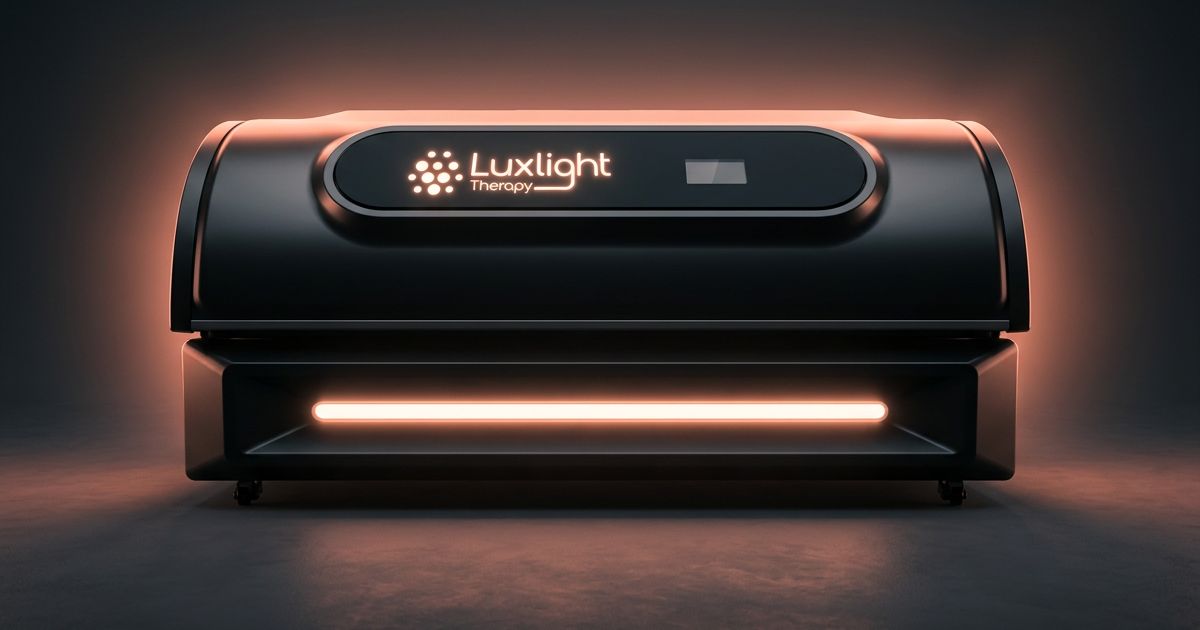
In every state whose rule text we checked, the laser rules and the tanning rules do not reach a non-laser LED bed. Laser rules turn on stimulated emission. Tanning rules turn on ultraviolet output. An LED bed emitting 630 to 850 nm is neither.
That surprises most operators, and it is the opposite of what equipment salespeople usually imply. The real constraints are three things most buyers never ask about: the device's FDA prescription status, your state's scope-of-practice and advertising rules, and ordinary liability.
The short version: what you claim selects the regulatory regime, not what you own. Same bed, same room, same employee. Market it as general wellness and the analysis below passes. Market it as treating arthritis and it flips.
This is a summary of rule text, not legal advice. State law varies, we could not verify every state, and you should confirm with counsel licensed where you operate before you open.
Key Facts
- Texas defines a laser by stimulated emission. 25 TAC §289.301(d)(29). LEDs emit spontaneous, incoherent light. The practitioner-supervision mandate in §289.301(b)(1) applies to "lasers or IPL devices" and does not textually reach an LED bed.
- Tanning statutes are defined by ultraviolet output. Florida §381.89(1)(c) and Ohio Administrative Code 4713-19-02(H) both define the regulated device as emitting 200 to 400 nm. A UV-free bed is not one.
- Arizona has no LED registration category — but its drafting is broader elsewhere, referring to "laser, IPL, or other light-emitting medical device." Do not assume the Texas analysis travels.
- Oregon goes the other way explicitly and places "light-emitting diode therapy" inside esthetician scope of practice.
- Ohio restricts the word "therapy" and bars estheticians from providing "any service that claims to have a medical or healing benefit."
- Some cleared LED body devices are prescription devices. Under 21 CFR 801.109 that means practitioner possession, sale only on a practitioner's order, and "Rx only" on the label. A gym with no clinician satisfies none of it.
- We verified rule text for Texas, Arizona, Florida, Ohio and Oregon. We could not verify California, New York or Colorado.
Do laser regulations apply to an LED bed?
On the face of the rule text we checked, no. The definitions turn on a physical property that LEDs do not have.
Texas has the clearest drafting. 25 Texas Administrative Code §289.301 is titled "Registration and Radiation Safety Requirements for Lasers and Intense-Pulsed Light Devices," and §289.301(d)(29) defines a laser as:
"An electronic device that emits stimulated radiation to energy density levels that could cause bodily harm. A laser may also produce an intense, coherent, directional beam of light by stimulating electronic or molecular transitions to lower energy levels."
An LED emits spontaneous radiation. It is incoherent and not directional. That is not a technicality — it is the physical difference between the two technologies, and the rule is written around it.
The consequence matters. §289.301(b)(1) is the sentence that forces med spas into a physician relationship:
"Lasers or IPL devices must not be used on humans or animals unless under the supervision of a licensed practitioner of the healing arts... and unless the use of lasers or IPL devices is within the scope of their professional license."
By its own terms, that requirement covers lasers and IPL. A non-laser, non-IPL LED device falls outside both prongs.
One drafting detail worth getting right, because people misread it. §289.301(b)(2) says the section "applies to lasers operating at wavelengths between 180 nanometers and 1 millimeter." That wavelength clause modifies lasers. It is not a freestanding rule covering any light source in that range.
Arizona: same outcome, different drafting, real caution
Arizona reaches the same practical result by a different route. Its non-ionizing radiation registration categories under A.A.C. R9-7-1302(F) are: tanning, Class A/B/C laser, laser light show, medical laser, and Class II surgical device. There is no category for a non-laser LED device, so no Category F registration appears to be required.
But Arizona's A.A.C. R9-7-1402 refers to a "laser, IPL, or other light-emitting medical device," which is materially broader than the Texas language. If you operate in Arizona, do not assume the Texas reasoning carries over. Ask the state.
Do tanning salon regulations apply?
No, in the states we checked, and for a clean reason: those statutes are defined by ultraviolet emission, and a red light bed produces none.
Florida Statute §381.89(1)(c) defines the regulated device by two conditions together — emission in the 200 to 400 nm range and being "used for tanning the skin." Ohio Administrative Code 4713-19-02(H) defines a "sunlamp product" the same way, by ultraviolet output.
A bed emitting 630 nm red and 810 to 850 nm near-infrared fails both tests. It is outside the wavelength band and it is not a tanning device.
This cuts both ways and it is worth being clear about. The tanning rules that do not apply include operator training requirements, parental consent rules, and posted warning signage. The sanitation requirements in those same chapters — cleaning and sanitizing body-contact surfaces between clients — also technically govern sunlamp products by their own terms. Whether they reach a non-UV bed is unsettled. Most operators follow them anyway, which is the defensible choice, and we would too. See red light therapy bed room requirements for what those sanitation rules actually require.
Can an esthetician or non-clinical staff member run the bed?
In at least one state, explicitly yes. Oregon Administrative Rule 817-015-0040 places "light-emitting diode therapy" inside esthetician scope of practice, and specifies that an esthetics device is "not a laser" or IPL.
That is the clearest affirmative statement we found. Most states are silent, which in a scope-of-practice context generally means the service is not reserved to a licensed profession.
But Ohio shows where the real constraint lives, and it is not the device. Ohio Administrative Code 4713-8-04(D) provides that estheticians "shall not provide any service that claims to have a medical or healing benefit," and restricts when the word "therapy" may be used at all.
Read that carefully. The device is unregulated. The marketing is regulated. An esthetician can operate the equipment and still put the business in violation by describing what it does the wrong way on a website or an intake form.
What actually determines which rules apply to me?
Your claims. Not your hardware.
This is the single most useful thing in this article, so here it is plainly:
| What you say | What follows |
|---|---|
| "General wellness. Relaxation and recovery." | Laser rules do not reach you. Tanning rules do not reach you. Esthetician scope is generally fine. |
| "Treats arthritis, neuropathy, chronic pain." | You are describing a medical device indication. Scope-of-practice rules engage. Advertising rules engage. FDA's framework engages. |
Same bed. Same room. Same employee. The copy on the website decides which column you are in.
This is also why the device's regulatory paperwork matters. FDA product code NHN under 21 CFR 890.5500 covers non-thermal light-based devices "for adjunctive use in pain therapy," and requires a 510(k). The same regulation exempts plain infrared heating lamps from premarket notification. The line between them is drawn by the claimed effect, not by the hardware.
So if your marketing describes non-thermal recovery and pain relief, that is the NHN framework, and you should be asking your vendor for a 510(k) number. See red light bed certifications and what to verify for how to check one in five minutes.
The prescription device trap
This is the one hard constraint that is not about state law, and it is a deal-breaker if you get it wrong.
Some cleared full-body and LED body devices are prescription devices. FDA has issued warning letters involving LED body equipment whose underlying clearances were prescription-only.
Under 21 CFR 801.109, a prescription device must be:
- in the possession of a licensed practitioner,
- sold only on the order of that practitioner, and
- labeled "Rx only."
A gym with no clinician on site satisfies none of those three. Neither does most of a tanning salon's operating model.
Check the device label before you buy. It takes ten seconds and it is the difference between a working business model and a machine you cannot legally operate the way you planned to. Any vendor should be able to tell you immediately whether the bed is prescription or over-the-counter, and if they hesitate, that is your answer.
What should I actually do before opening?
Five steps, in order, and none of them are expensive.
- Write your marketing copy first. Before you buy, before you build the room. The claims decide everything downstream.
- Get the device's prescription status in writing, plus the 510(k) number and product code if it has one.
- Call your state's radiation control program and your cosmetology board. Describe the device accurately — non-laser LED, no UV emission, specific wavelengths — and ask whether anything in their chapters applies. Get the answer in writing or at least note who said it and when.
- Follow the sanitation rules anyway, whether or not they technically reach you.
- Have counsel in your state read your website. Not the equipment contract. The website. That is where the exposure is.
What else do operators ask about this?
Do I need a license to offer red light therapy? In the states whose rule text we checked, no license is required to operate a non-laser LED bed, because the laser and tanning statutes do not reach it by their own definitions. That is not a guarantee for every state, and it changes if your device is a prescription device or if your marketing makes medical claims. Confirm with your state board.
Does my med spa need a physician relationship for this? For the LED bed specifically, in Texas, the rule that creates that requirement applies to "lasers or IPL devices" and does not textually reach an LED. If the same med spa also runs laser or IPL equipment, that requirement is already engaged for those devices regardless. And if your marketing describes the LED bed in medical terms, you have moved the question from the device rule to the scope-of-practice rule.
Can I say "therapy" in my business name or marketing? In Ohio, the word is restricted in a cosmetology context under Administrative Code 4713-8-04(D), alongside the bar on claiming a medical or healing benefit. Other states vary. If you are in a licensed salon or spa setting, check your board's rules on the specific word before it goes on a sign.
Do I need client waivers or intake screening? We found no published standard requiring them for light therapy in a non-medical facility. That absence is not permission. Ordinary negligence liability applies whether or not a regulator has written a rule, and the manufacturer's labeling may itself require screening or eye protection — which under OSHA 29 CFR 1910.303(b)(2) you are obligated to follow. Talk to your insurer.
What if my state is not listed here? We verified rule text for Texas, Arizona, Florida, Ohio and Oregon, and could not verify California, New York or Colorado. The pattern we found is consistent, but a pattern is not a ruling. Call your state radiation control program, describe the device accurately, and ask.
Does any of this change if I buy a more powerful bed? Not under the definitions above. Laser rules turn on stimulated emission, tanning rules on ultraviolet output. Neither is a function of wattage. What can change with a more capable device is its FDA classification and whether it is prescription-only, so the label check matters more, not less, as you move up in equipment.
This article is for informational purposes and is not legal advice. Licensing, scope of practice, radiation control, and advertising rules vary by state and depend on how a service is marketed and how a device is classified. Rule text is quoted as published and may have been amended. We verified Texas, Arizona, Florida, Ohio and Oregon, and did not verify California, New York or Colorado. Confirm all requirements with counsel licensed in your jurisdiction and with your state's regulatory boards before offering any service. No statement here is a claim about the medical effectiveness of any device.
Sources
- Definition of "laser" by stimulated emission; scope limited to lasers and IPL; practitioner-supervision requirement — 25 Texas Administrative Code § 289.301(d)(29), (b)(1) and (b)(2), via Cornell Legal Information Institute, retrieved October 6, 2026. https://www.law.cornell.edu/regulations/texas/25-Tex-Admin-Code-SS-289-301
- Non-ionizing radiation registration categories, containing no LED category — Arizona Administrative Code R9-7-1302(F), via Cornell Legal Information Institute, retrieved October 6, 2026. https://www.law.cornell.edu/regulations/arizona/Ariz-Admin-Code-SS-R9-7-1302
- "Laser, IPL, or other light-emitting medical device" — Arizona Administrative Code R9-7-1402.
- Tanning device defined by 200–400 nm emission and use for tanning the skin — Florida Statute § 381.89(1)(c).
- "Sunlamp product" defined by ultraviolet emission — Ohio Administrative Code 4713-19-02(H).
- Prohibition on claiming a medical or healing benefit; restriction on the term "therapy" — Ohio Administrative Code 4713-8-04(D).
- Light-emitting diode therapy placed within esthetician scope; esthetics device is not a laser or IPL — Oregon Administrative Rule 817-015-0040.
- Prescription device requirements: practitioner possession, sale on practitioner order, "Rx only" labeling — 21 CFR § 801.109.
- Product code NHN, non-thermal light-based device for adjunctive use in pain therapy, 510(k) required — U.S. Food and Drug Administration, Product Classification Database, retrieved October 6, 2026. https://www.accessdata.fda.gov/scripts/cdrh/cfdocs/cfPCD/classification.cfm
- Infrared lamp classification and the premarket notification exemption limited to therapeutic heating lamps — 21 CFR § 890.5500. https://www.ecfr.gov/current/title-21/section-890.5500
- Listed equipment must be installed and used in accordance with its listing and labeling — 29 CFR § 1910.303(b)(2). https://www.ecfr.gov/current/title-29/section-1910.303
Explore the Equipment
Ready to explore commercial wellness equipment?
Browse the Lux S10 Pro red light therapy bed and the Lux D10 Pro vitamin D wellness bed, or request a quote and we'll help you match a configuration to your facility.