How to Add Red Light Therapy to a Med Spa Without Adding Staff Hours
Red light therapy is one of the few med spa services that runs unattended. Staffing math, room utilization, pricing, and how to add it without hiring.
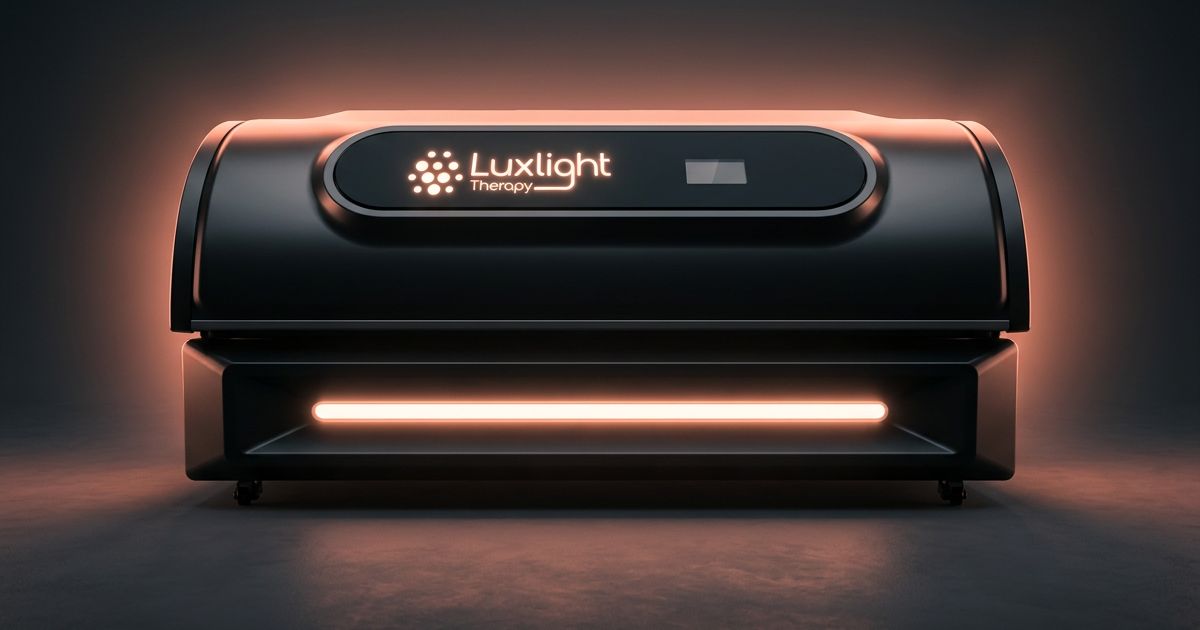
Intro
Most ways to grow a med spa cost you provider hours. A new injectable service needs an injector. A new laser needs a trained operator standing there for the whole appointment. Revenue goes up, payroll goes up with it, and the margin barely moves.
Red light therapy is one of the few exceptions on a med spa menu, and the reason is unglamorous: the session runs on a timer with nobody in the room.
That single operational fact is what makes it worth adding. Not the technology. The labor profile.
This article covers what the staffing math actually looks like, how to price it, where to put the bed, and the compliance lines you should not cross. It is written for owners and operators who are deciding whether this fits their floor plan and their payroll, not for clinicians.
Key Facts
- A full-body red light session runs 10 to 20 minutes, unattended, on a timer.
- Staff time per session is roughly five minutes: intake, eye protection, and cleaning between clients.
- That supports a front-desk-only staffing model at most session volumes.
- Provider compensation at a typical med spa runs 25% to 35% of treatment revenue. Red light avoids most of that cost.
- Med spas charge $75 to $280 for standalone LED facial treatments and $25 to $60 as an add-on to another service.
- Full-body bed sessions at med spa and clinical settings run $50 to $200.
- Red light memberships commonly run $59 to $129 per month.
- Target treatment-room utilization in a well-run med spa is 90% to 95%.
- No-show rates run 15% to 25% without automated reminders and 8% to 12% with SMS reminders.
- Commercial full-body beds run roughly $15,000 to $100,000 at published retail. Beauty-class beds emitting visible red only start near $15,000; full-spectrum systems adding near-infrared at 810 to 940nm run $60,000 to $100,000.
Why does red light therapy not add staff hours?
Because the client is alone in the room for the part that takes the longest. A licensed provider is not required to be present during a light session the way they are for an injectable or an energy-based treatment. Staff handle intake, positioning, and eye protection at the start, then cleaning at the end, and the fifteen minutes in between require nobody.
Compare the labor profile against other services on a typical menu:
| Service | Provider present for | Staff minutes per appointment |
|---|---|---|
| Injectables | Entire appointment | 30 to 60 |
| Laser or IPL | Entire treatment | 30 to 60 |
| Facial | Entire treatment | 45 to 75 |
| LED panel add-on | Usually monitored | 20 to 30 |
| Full-body red light bed | Setup and cleanup only | ~5 |
That bottom row is the whole argument. Every other line on your menu converts provider time into revenue at a roughly fixed ratio. Red light breaks the ratio.
Two honest caveats before you build a plan on this.
Scope of practice for light-emitting devices varies by state. Some states regulate who may operate certain devices, and the rules are not uniform. Confirm with your state board before assuming a front-desk model is permissible where you are.
"Unattended" is not "unsupervised." Someone needs to be in the facility, reachable, and trained on the equipment. This is a staffing efficiency, not a staffing elimination.
What does the room math look like?
A red light bed turns a room into a revenue center that does not consume provider capacity. In a facility where treatment rooms are the constraint, that changes which room is your bottleneck.
Run it on a 30-minute cycle, meaning a 20-minute session plus 10 minutes of changeover:
| Per hour | Per 8-hour day | Per 26-day month | |
|---|---|---|---|
| Theoretical capacity | 2 sessions | 16 | 416 |
| Realistic at 50% | 1 | 8 | 208 |
| Realistic at 30% | 0.6 | 4.8 | 125 |
Now attach revenue. At $60 a session and 8 sessions a day across 26 days:
8 × $60 × 26 = $12,480 a month gross
Against that, the direct costs are electricity, disinfectant, and about 40 minutes of front-desk time a day. A 6 kW bed running four hours daily at $0.15/kWh is roughly $108 a month in power.
Compare that to the same room running facials at $150 with a provider paid 30% of treatment revenue. The facial generates more per appointment and fewer appointments per day, and roughly a third of the revenue walks back out as provider compensation.
This is not an argument to replace facials with a light bed. It is an argument that red light fills a different slot in your economics: lower revenue per session, far lower cost per session, and no draw on your scarcest resource.
The room you should actually use
Not your best treatment room. A red light bed needs about 10 by 12 feet of clear floor and does not need plumbing, a sink, or medical-grade finishes. That makes a converted storage room, a wide hallway alcove, or an underused retail corner a better candidate than a room that could otherwise hold an injector.
Two constraints that do matter: the bed weighs around 661 lbs, so confirm floor loading, and it needs a dedicated 240V circuit. Our electrical requirements guide covers what to check before you commit to a room.
Which class of bed belongs in a med spa?
That depends on whether you are adding a skin service or a recovery service, because the two classes of equipment are genuinely different products that happen to share a name.
Beauty-class beds emit visible red only, roughly 620 to 660nm, and are sold through tanning distribution. The Ergoline Beauty Angel, the device in Planet Fitness's Total Body Enhancement booths, was independently measured at a 620nm primary peak with secondary output at 546, 595, 700 and 705nm and no near-infrared in the 810 to 850nm range. Its brochure describes it as "tuned at 633 nanometers" and publishes no irradiance figure. Dealer pricing runs around €16,080 before tax.
Full-spectrum systems add near-infrared at 810, 830, 850 and sometimes 940nm. TheraLight 360 publishes 633/810/850/940nm at $84,997 to $99,997. Prism Light Pod publishes 630/660/850nm at $95,995. NovoTHOR runs 660 and 850nm, quote-only.
| Beauty-class | Full-spectrum | |
|---|---|---|
| Wavelengths | Visible red only, ~620–660nm | Red plus near-infrared, 810–940nm |
| Capital cost | ~$15,000–$20,000 | $60,000–$100,000 |
| Fits a menu built around | Skin appearance, facials | Recovery, performance, athletic clientele |
| FDA pathway | Often none | Often a 510(k) under a pain or aesthetic product code |
If your menu is skin-led, a beauty-class bed may be the right capital decision, and an LED panel may be better still since it integrates with facials you already perform.
If you are trying to open a recovery line, or you share a clientele with a gym, a physical therapist, or a sports practice, the full-spectrum machine is the one that supports that positioning.
The most verifiable fact about any given machine is whether it holds a 510(k) and under which product code. FDA maintains code NHN for powered light-based non-thermal instruments used adjunctively in pain therapy and code ONF for aesthetic use. Ask any vendor for the clearance number. There is no trade-association tier classification, so this is the check that actually works.
One caution on spec sheets: every vendor publishes an irradiance figure in mW/cm² and none state the measurement distance or method. The photobiomodulation literature has criticized this directly, with Hadis and colleagues noting in 2016 that measuring at the aperture rather than at the target overstates delivered irradiance. Compare wavelengths and clearance status, which are verifiable. Treat irradiance claims as unaudited.
How should a med spa price red light therapy?
Three models work, and most successful operators run more than one at once. Standalone sessions capture new clients, add-ons raise the ticket on appointments you already have, and memberships smooth demand.
Standalone sessions. Med spas charge $50 to $200 for a full-body bed session depending on market. Panel-based LED facial treatments price higher, $75 to $280, because they are typically provider-monitored and bundled with skin prep. Do not conflate the two when you build your menu.
Add-on to an existing appointment. This is the highest-margin line on the list. LED add-ons to a facial or body treatment run $25 to $60. The client is already in the building, already booked, and already paying. You are adding revenue to a slot that was going to happen anyway.
Membership. Red light memberships commonly run $59 to $129 a month. Memberships do three things at once: they create predictable revenue against the equipment payment, they raise visit frequency, and they raise the odds a member books something else while they are in the building.
| Model | Typical price | Best for |
|---|---|---|
| Standalone session | $50 – $200 | New client acquisition |
| Add-on to another service | $25 – $60 | Raising average ticket |
| Monthly membership | $59 – $129 | Predictable revenue, visit frequency |
| Package of 6 | $400 – $1,500 | Clients who want a defined course |
A note on frequency, since it drives what a membership can safely include. The best-sourced protocol figure in the consumer market comes from the Beauty Angel device used in Planet Fitness locations: 12-minute sessions, two to three times a week, for at least 90 days. Vendor guidance for commercial beds commonly caps memberships at two sessions per week. Design your membership so that a heavy user does not consume more capacity than the price supports.
How do you get clients to actually book it?
Sell it as an add-on at the point of an existing booking, not as a standalone service you hope people search for. The add-on conversation costs nothing and converts far better than trying to fill a new service from scratch.
Concretely:
Train the front desk to offer it at checkout and at booking. One sentence, attached to an appointment the client already has. This is the whole program at most facilities.
Put the bed where clients walk past it. A bed in a back room nobody sees generates no curiosity. Visibility does more than advertising.
Bundle it into an existing package rather than launching it alone. "Facial plus light" reads as an upgrade. A new standalone service reads as something to research.
Fix your reminder system while you are at it. No-show rates run 15% to 25% without automated reminders and 8% to 12% with SMS reminders. If you are adding capacity, you may as well stop leaking the capacity you already have. That single change is often worth more than the new service.
What can you legally say about it?
Describe it as a wellness, recovery, and skin-appearance service. Do not make disease or treatment claims. This is not a stylistic preference, it is the line the FTC enforces, and red and infrared light devices have been enforced against directly.
The FTC requires advertisers to hold competent and reliable scientific evidence before a health claim runs, defined as objective testing evaluated by relevant experts and generally accepted in the profession. Randomized controlled human trials are the standard. Three specifics worth internalizing:
- Hedging does not cure an unsubstantiated claim. "May help with" is not a fix. The FTC judges the net impression.
- Implied claims are judged like express ones. Imagery, before-and-after photos, service names, and context can create a disease claim on their own.
- Testimonials must themselves be substantiated. A client's story is not a substitute for evidence, and material connections must be disclosed.
In 2020 the FTC obtained a $22 million judgment against the marketers of an infrared light pain device over claims that it was "clinically proven," that it had FDA approval to treat chronic pain and reduce inflammation, and over advertising formatted to look like independent journalism.
Separately, FDA clearance is not FDA approval, and neither is facility registration. If a manufacturer holds a 510(k) clearance, that clearance is for a specific intended use and belongs to them, not to you. Marketing outside the cleared intended use is a problem regardless of what the device can do.
Reasonable language: supports skin appearance, supports post-workout recovery and muscle comfort, promotes relaxation, part of a healthy lifestyle.
Language to avoid without substantiation and appropriate regulatory status: treats, cures, or heals anything; reduces inflammation; treats pain, arthritis, neuropathy, or any named condition; "clinically proven"; "FDA approved."
Have a lawyer review your menu copy, your website, and your staff scripts. This is cheap insurance relative to an enforcement action.
What does it cost to get started?
Budget for the bed, the electrical work, and a small launch push. The bed is the large number and the only one most people plan for.
| Item | Typical range |
|---|---|
| Beauty-class full-body bed, red only | $15,000 – $20,000 |
| Full-spectrum bed with near-infrared | $60,000 – $100,000 |
| Dedicated 240V circuit, short run | $800 – $2,000 |
| Electrical permit and inspection | $80 – $400 |
| Subpanel, if your panel is full | $400 – $2,000 |
| Freight and placement | Varies by location |
| Signage, menu updates, staff training | Usually under $1,000 |
The line that surprises people is electrical, and it surprises them late. Have a licensed electrician run a load calculation before you sign a purchase order. If your panel lacks capacity, a straightforward $1,500 circuit becomes an $8,000 to $25,000 project.
Most operators finance the equipment rather than paying cash, and Section 179 may allow the full purchase price to be deducted in the year the bed is placed in service. Our financing guide covers what lenders underwrite and how the tax treatment differs between financing structures.
What else do med spa owners ask?
Does red light therapy require a licensed provider to operate?
Scope of practice for light-emitting devices varies by state, and there is no single national rule. The session itself runs unattended on a timer, which is why a front-desk model works operationally, but confirm with your state board before you build a staffing plan around it.
How much staff time does each red light session take?
Roughly five minutes total: intake, eye protection, and positioning at the start, then cleaning the acrylic between clients. The 10 to 20 minute session runs with nobody in the room.
What should a med spa charge for red light therapy?
Full-body bed sessions typically run $50 to $200 depending on market. As an add-on to an existing facial or body treatment, $25 to $60 is common. Memberships run $59 to $129 a month. Panel-based LED facials price higher, $75 to $280, because they are provider-monitored.
What is the difference between a tanning salon red light bed and a clinical one?
Wavelengths and price. Beauty-class beds emit visible red only, roughly 620 to 660nm, and cost $15,000 to $20,000. Full-spectrum systems add near-infrared at 810 to 940nm and run $60,000 to $100,000. Ask any vendor for the FDA 510(k) clearance number and product code, since that is the most verifiable difference between two machines.
Is a full-body bed better than an LED panel for a med spa?
They do different jobs. A bed covers the whole body in one short session with no repositioning, which is what makes the low-labor model work. A panel treats one area at a time and is usually monitored, which keeps it inside your provider-hour economics. Many facilities run both.
How many sessions a day can one bed handle?
Two to three per hour on a 30-minute cycle, so 16 to 24 across an 8-hour day as a physical ceiling. Realistic planning is 4 to 12 a day in the first year as clients learn it exists.
What room do I need for a red light therapy bed?
Roughly 10 by 12 feet of clear floor with verified ceiling clearance to the lowest obstruction. No plumbing or sink required. A full-size bed weighs around 661 lbs, so confirm floor loading, and it needs a dedicated 240V circuit.
How do I add it without disrupting my current schedule?
Launch it as an add-on offered at booking and checkout on appointments you already have, rather than as a standalone service you have to fill. That uses existing client flow and requires no change to your provider schedule.
What can I legally say when marketing red light therapy?
Keep it to wellness, recovery, and appearance language with no reference to disease. The FTC requires competent and reliable scientific evidence before any health claim, and hedging with "may help" does not fix an unsubstantiated claim. Have counsel review your copy.
The short version
Red light therapy earns its place on a med spa menu because of its labor profile, not its technology. A five-minute staff commitment per session is what lets it generate revenue without consuming the provider hours that constrain everything else you offer.
Put it in a room that could not hold an injector. Sell it as an add-on at the point of an appointment you already have. Price a membership that caps weekly usage. Check your panel before you sign. And keep your marketing on the wellness side of the line.
Specs and a side-by-side comparison of both our commercial units are on the commercial red light therapy beds page. If you want us to size a configuration for your room, request a quote.
Sources
- Med spa LED treatment pricing, add-on pricing, membership pricing and session timing — Facial Finders LED light therapy facial cost guide, April 2026
- Standalone LED session pricing cross-check — Portrait Care medical spa menu and pricing, September 2026
- Provider compensation 25 to 35% of treatment revenue; no-show rates with and without SMS reminders — AmSpa data via ScaleHaven, April 2026
- Med spa treatment-room utilization targets 90 to 95% — Projected Growth Consulting, June 2026
- US med spa industry size — American Med Spa Association, updated April 2026
- Red light session labor profile and front-desk staffing model — Body Balance System commercial guide, April 2026 (vendor source)
- Full-body bed session pricing at commercial venues — Palm Beach Tan, SunsUp Tan & Wellness, iCRYO published pricing, September 2026
- Beauty Angel protocol, 12 minutes 2 to 3 times weekly — Light Therapy Insiders, updated July 2026
- Commercial bed retail pricing — RecovAthlete commercial listings, September 2026
- TheraLight 360 and 360i pricing and wavelengths — DaVinci Medical USA product pages, September 2026
- Prism Light Pod wavelengths and pricing — prismlightpod.com and RecovAthlete, September 2026
- NovoTHOR wavelengths and quote-only status — novothor.com/technology
- Ergoline Beauty Angel independent spectrometer measurement, 620nm peak, no near-infrared — Light Therapy Insiders, updated July 2026
- FDA product codes NHN (21 CFR 890.5500) and ONF (21 CFR 878.4810) — accessdata.fda.gov
- Irradiance measurement criticism — Hadis et al., Lasers in Medical Science, 2016;31(4):789–809
- FTC Health Products Compliance Guidance — ftc.gov, December 2022
- FTC v. Physicians Technology LLC, $22M judgment — ftc.gov press release, June 2020
- FDA General Wellness: Policy for Low Risk Devices — fda.gov
- FDA clearance versus approval distinction — MedCity News, March 2026
This article is business and equipment guidance, not medical, legal, or financial advice. Revenue figures are illustrative models, not projections or guarantees. Scope-of-practice rules vary by state. Red light therapy should be offered as a wellness, recovery, and appearance service and never marketed as treating, curing, or preventing disease.
Explore the Equipment
Ready to explore commercial wellness equipment?
Browse the Lux S10 Pro red light therapy bed and the Lux D10 Pro vitamin D wellness bed, or request a quote and we'll help you match a configuration to your facility.