What Should You Charge for Red Light Therapy Sessions?
Published session prices and membership structures from 13 US facilities, the five pricing models that recur, and why unlimited ranges from $55 to $399.
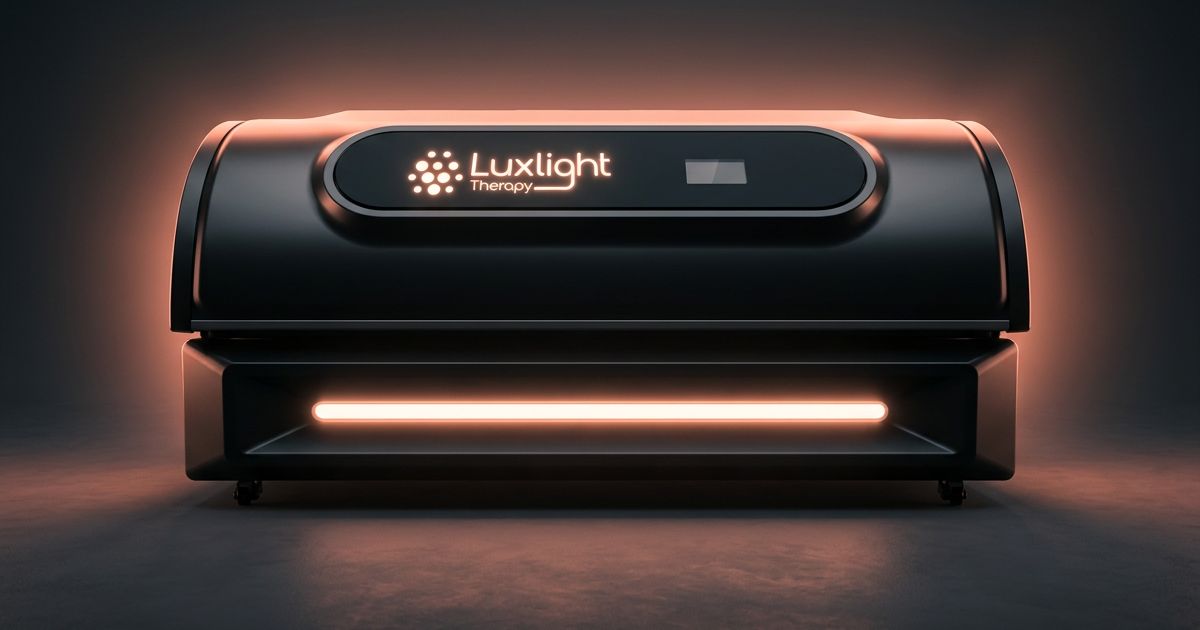
Single sessions run $29 to $65 at most US facilities. Unlimited monthly memberships run $54.95 to $399 for a nominally identical promise. That seven-fold spread is the real story, and it is not about the equipment.
This article is about pricing structure — what to charge and how to package it. For the capital cost of the bed and the payback model, see how much a commercial red light therapy bed costs and red light therapy bed ROI for gyms.
Every price below is a facility's own published figure, retrieved October 2026. No survey data, no vendor estimates, no "industry averages" from people selling beds.
Key Facts
- Single sessions cluster at $29 to $65. The verified floor is $10.99 and the ceiling is $99 for a 30-minute attended session.
- Unlimited monthly ranges from $54.95 to $399 — a 7x spread. Tanning salons cluster at $55 to $89. Recovery studios and franchises cluster at $199 to $399. There is almost nothing between $100 and $190.
- The 4 / 8 / 12 session ladder appears at five of thirteen facilities independently. It is the default structure in this category.
- Package discounts from single session to largest pack cluster at 23% to 35%.
- Only two of thirteen facilities name their equipment. Price is almost never tied to a disclosed machine.
- Four franchise concepts all decline to publish national rates.
What do facilities actually charge per session?
Here is every verified published price we found.
| Facility | Type | Single session | Package | Monthly |
|---|---|---|---|---|
| Bradford Tanning Salon (Haverhill, MA) | Tanning | from $10.99 | 5 / 10 sessions | 1 mo unlimited |
| Peaks Athletic Club | Gym | $15 day pass | — | $50 member / $55 non-member |
| Randolph Mobility & Wellness (KC metro) | Clinic | $35 ($20 intro) | 5/$150 · 12/$348 · 24/$648 · 36/$828 | — |
| Red Light ReTreat | Studio | $35 | 3/$95 · 5/$149 · 10/$269 · 20/$499 | $79 · $139 · $179 · $269 |
| SunsUp Tanning (Portland/Vancouver) | Tanning | $45 | — | $65 · $75 · $115 · $200 |
| Capital Cryo (DC / Bethesda) | Recovery | $50 | 5/$200 | $149 · $249 · $349 · $399 unlimited |
| Perspire Sauna Studio (Santa Monica) | Franchise | $60 ($30 intro) | — | $129 · $199 · $249 unlimited |
| Light Lounge (Colorado) | Studio | $65 ($99 attended) | 3/$195 · 10/$499 | $199 charter |
| Upper East Side Tan (NYC) | Tanning | — | — | $89 unlimited |
| Desert Sun Tanning | Tanning | — | — | from $54.95 unlimited |
| iCRYO SouthPark (Charlotte) | Franchise | $29 intro | — | not published |
| Restore Hyper Wellness (Ann Arbor) | Franchise | — | — | $170 / 8 credits ($21.25 ea) |
| Red Light Method Express (Atlanta) | Studio | free first | — | $109 · $199 · $249 (12-mo) |
Two patterns jump out.
Facility type predicts price more than equipment does. Tanning salons sell unlimited at $55 to $89. Recovery studios and franchises sell it at $199 to $399. Same modality, four to seven times the price. What differs is the room, the brand, and what else is in the building.
Almost nobody discloses the device. Of thirteen facilities, two named equipment: Bradford (a RenuvaSkin full-body bed) and iCRYO ("medical-grade LED panels, 660 nm red and 850 nm near-infrared").
That second point has a direct consequence for your own pricing. If you buy a higher-specification machine, the market will not assume it. Consumers cannot compare on specification because almost nobody publishes one, so price gets set by positioning. If you want to charge at the top of the range, you have to show people why, and publishing your bed's actual specifications is the cheapest way to do it. See what commercial buyers should check on wavelengths for which numbers are worth publishing and which are not comparable.
Which pricing structure should I use?
Five structures recur. Rank them by how often operators actually land on them, not by which sounds cleverest.
1. The monthly session ladder — 4 / 8 / 12 — is the default. Five of thirteen facilities arrived at exactly that shape independently: Capital Cryo, Red Light ReTreat, Perspire, Red Light Method, and Restore. When five operators who do not talk to each other converge on the same ladder, copy it and move on. This is not where you want to be creative.
2. Declining-rate packages with an expiry. Typically 90 days to six months. Observed discount depth from single session to largest pack:
- Randolph: $35 to $23 per session = 34% off
- Red Light ReTreat: $35 to $24.95 = 29% off
- Light Lounge: $65 to $49.90 = 23% off
A 25% to 35% discount on the biggest pack is the market norm. Deeper than that and you are leaving money on the table with your heaviest users.
3. Unlimited monthly. Covered in its own section below. This is where the real decision gets made.
4. Cross-modality fungible credits. Capital Cryo and Restore let one credit buy red light or cryo or sauna or compression. More sophisticated than it looks: it smooths utilization across equipment and turns red light into a demand-filler rather than a standalone profit center that has to carry its own occupancy. If you already run other recovery services, this is probably your answer.
5. Bundled, never priced separately. Perspire folds red light into sauna sessions. Red Light ReTreat bundles bed plus sauna plus shake plate into every session. Red Light Method bundles red light with Power Plate. At these facilities no standalone red light price is recoverable at all — which is the point. It defeats per-session comparison shopping. If you are worried about being price-shopped against the tanning salon down the road, this is the structure that solves it.
The anchoring tactics every one of them uses
- Steep intro offers. $20 against a $35 standard rate. $29 at iCRYO. $30 against a $60 single at Perspire. Free first session at two facilities.
- Struck-through pricing. Peaks shows $100 crossed out next to $55.
- Founding-member rate locks. Red Light ReTreat offers roughly 25% off for a 12-month commitment.
- On-page competitor comparison. Upper East Side Tan publishes two competitors' prices directly on its own pricing page.
How should I price unlimited?
Pick your end of the 7x spread deliberately, because the market has two distinct ends and almost nothing in between.
| Segment | Unlimited monthly |
|---|---|
| Tanning salons | $54.95 – $89 |
| Gyms (add-on) | $50 – $55 |
| Recovery studios and franchises | $199 – $399 |
There is essentially no $100 to $190 tier in the verified data. That gap is real, and it means the positioning decision is binary. You are either an amenity attached to something else, or you are a destination service with a room and a brand around it. Pricing in the middle gets you neither audience.
One operator published the breakeven logic openly: a studio at $199 a month for unlimited only beats a $75 drop-in if the client shows up more than three times monthly. Run that against your own numbers before you set the tier, because unlimited is a bet on average utilization and the heavy users are the ones who will find you.
The gym data point is worth sitting with. Peaks Athletic Club charges $50/month to members and $55/month to non-members. A five-dollar differential is barely a differential. That operator is pricing red light as a near-flat add-on rather than as a reason to upgrade membership. Whether that is right depends on whether you want the service to generate revenue or to reduce churn. Those are different goals and they want different prices.
One thing to know before you model revenue
Nobody has credible utilization data for this equipment, and the people publishing it are selling beds.
We went looking for any independent study of utilization rates, sessions per day, or capacity for recovery equipment in gyms and studios. Every figure we could trace to a source turned out to be equipment-vendor marketing. If a sales deck shows you "12 sessions a day," ask where that number came from.
What you can model on, because these are published and verifiable:
- Session lengths run 8 to 20 minutes. Verified: 8/10/12 minutes (Upper East Side Tan), 12 minutes (iCRYO), 15 minutes (Bradford), 10–20 minutes (Desert Sun).
- One client per room. Where this is regulated it is required — Ohio Administrative Code 4713-19-05(C)(3) limits a room to one client at a time. Model it that way regardless.
- Changeover time is real. Several states require cleaning and sanitizing body-contact surfaces between every client as two separate steps. Add it to cycle time.
- Your own foot traffic. The only input that is actually about your business.
Work it top down, not bottom up. Take your existing member count or monthly visits, apply a conversion rate you can defend, and see what price it takes to cover the payment. Do not start from theoretical capacity, because theoretical capacity assumes a queue you do not have yet. The full payback model is in red light therapy bed ROI for gyms.
The pricing checklist
| Decision | What the data says |
|---|---|
| Single session | $29 to $65 is the cluster. Below $25 you are a tanning salon; above $75 you need a reason. |
| Package discount | 25% to 35% off single rate at the largest pack |
| Membership ladder | 4 / 8 / 12 sessions. Do not invent something new. |
| Unlimited | $55 to $89 as an amenity, $199 to $399 as a destination. Nothing in between. |
| Intro offer | Roughly half your standard single rate |
| Member vs non-member | Decide whether this is a revenue line or a retention tool. They price differently. |
| Device disclosure | Publish your specifications. Two of thirteen competitors do. |
| Claims | Write your marketing copy before you open. What you claim decides which rules apply to you — see who can legally operate a red light therapy bed. |
What else do operators ask about red light pricing?
What is the most common single-session price? The cluster is $29 to $65, with $35 appearing most often in the verified data. The floor found was $10.99 at a Massachusetts tanning salon and the ceiling was $99 for a 30-minute attended session with a therapist present. Attended sessions price much higher than self-serve.
Should I include it in a membership tier or charge separately? Both work and they solve different problems. A separate charge generates measurable revenue you can attribute to the equipment. Inclusion in a tier reduces churn but makes the bed's return nearly impossible to isolate. One verified gym charges $50 to members and $55 to non-members, effectively treating it as a standalone product sold to everybody.
Why do franchises not publish their prices? All four franchise concepts reviewed — Restore Hyper Wellness, iCRYO, Perspire, Light Lounge — set pricing per location, and two gate it behind a lead-capture form entirely. For an independent operator this is useful: your local franchise competitor cannot advertise a price against you either, and neither of you can benchmark the other without calling.
How long should a session be? Published session lengths run 8 to 20 minutes, with 10 to 15 minutes most common. Your equipment manufacturer's instructions govern this, and under OSHA 29 CFR 1910.303(b)(2) you are obligated to follow the labeling on listed equipment. Do not set session length from a competitor's website.
Can I offer unlimited without getting destroyed by heavy users? That is the bet unlimited makes. One operator published the breakeven openly: at $199 unlimited against a $75 drop-in, the client has to come more than three times a month before you lose. Set the tier against your own drop-in price and your own expected frequency, and consider a session-capped tier instead if your room count is tight.
Does HSA or FSA eligibility matter? One franchise markets its services as HSA/FSA eligible. Eligibility generally depends on medical necessity and documentation, not on the service category, and claiming it has implications for how you describe what you offer. Talk to your accountant before putting it on a website.
This article is for informational purposes and is not legal, tax, or business advice. Prices listed are each facility's own published figures as of October 2026 and change without notice. No statement here is a claim about the medical effectiveness of any device.
Sources
Facility prices below are each business's own published figures, retrieved October 6, 2026.
- Capital Cryo, "Pricing + Memberships." https://www.capitalcryo.com/contents/memberships
- Light Lounge, "Light Lounge Red Light Therapy Pricing." https://lightlounge.life/pricing
- Red Light ReTreat, "Membership & Pricing." https://redlightretreat.com/membership-pricing/
- Red Light Method, Atlanta Midtown location page. https://redlightmethod.com/locations/atlanta-midtown-ga/
- Randolph Mobility & Wellness, "Red Light Therapy Pricing and Packages." https://www.randolphmedical.com/redlight-pricing
- Upper East Side Tan, "Red Light Therapy." https://www.uppereastsidetan.com/upper-east-side-red-light-therapy
- SunsUp Tanning Centers, "How Much Is Red Light Therapy? Cost Per Session & Memberships," December 26, 2025. https://sunsuptanningcenters.com/how-much-is-red-light-therapy/
- Desert Sun Tanning Salons, "Red Light Therapy." https://desertsuntanning.com/services/red-light-therapy/
- Bradford Tanning Salon, "Red Light Therapy." https://bradfordtanningsalon.com/product/red-light-therapy/
- Peaks Athletic Club, "Red Light Therapy." https://peaksathleticclub.com/red-light-therapy
- iCRYO SouthPark, "Red Light Therapy Near Me in Charlotte, NC." https://icryo-southpark-nc.com/services/red-light-therapy
- Restore Hyper Wellness, Ann Arbor MI001 location page and "Memberships." https://www.restore.com/memberships
- Perspire Sauna Studio, Santa Monica, CA. https://www.perspiresaunastudio.com/ca/santa-monica/
- Breakeven commentary on $199 unlimited versus $75 drop-in — Nortex Spine and Joint, "Break Even in Weeks: U.S. Red Light Therapy Costs, Clinic vs Home." https://www.nortexspineandjoint.com/blog/red-light-therapy-cost/
- One client per room — Ohio Administrative Code 4713-19-05(C)(3).
- Listed equipment must be used per its labeling — 29 CFR § 1910.303(b)(2). https://www.ecfr.gov/current/title-29/section-1910.303
Explore the Equipment
Ready to explore commercial wellness equipment?
Browse the Lux S10 Pro red light therapy bed and the Lux D10 Pro vitamin D wellness bed, or request a quote and we'll help you match a configuration to your facility.